

Expansion
When Life Shifts in Your 50s and 60s
I’m approaching 60. There, I said it. And instead of quietly sliding into this next decade, I’ve decided to make a bit of a fuss about it.
Read the unfiltered truth
A chronicle of the second act
For women over fifty navigating change and wondering what comes next. Find honest stories, practical resources for health, money and new experiences, and a free quiz to help you choose your direction and first step. When you're ready, a printable journal takes it further: $9 on your own, or personalized from the quiz.
More to your story. Room to figure out what comes next.
See what’s inside
Your starting point
What’s bringing you here right now?
How are you feeling about this season?
What do you want this next chapter to feel like?
Week 1 — Notice
Days 1–7 · See where you are, without judgment
Write down your top three priorities for these two weeks
Take a 15-minute walk outside, three times this week
Notice one thing you do out of habit rather than choice
Point A → Point B
Where are you now? (Point A)
Where do you want to be in 14 days? (Point B)
Journal samples aren’t printable. Get the full journal at shesunscripted.com.
This is a sample of a few pages. The full I CHOOSE journal gives you 14 days of prompts to fill in yourself, the same for everyone. No quiz needed.
I’m not starting over. I’m starting from everything I already know.
Carol B., 61
Illustrative voices, inspired by the women in our community.
Life changes. Sometimes without consulting us. These stories explore the shifts in identity, health, confidence and voice that come with this chapter—and what we choose to do next.
I’m approaching 60. There, I said it. And instead of quietly sliding into this next decade, I’ve decided to make a bit of a fuss about it.
Read the unfiltered truth
There’s a strange moment after you drop the last kid off at college. You come home. And no one needs anything.
Read the unfiltered truth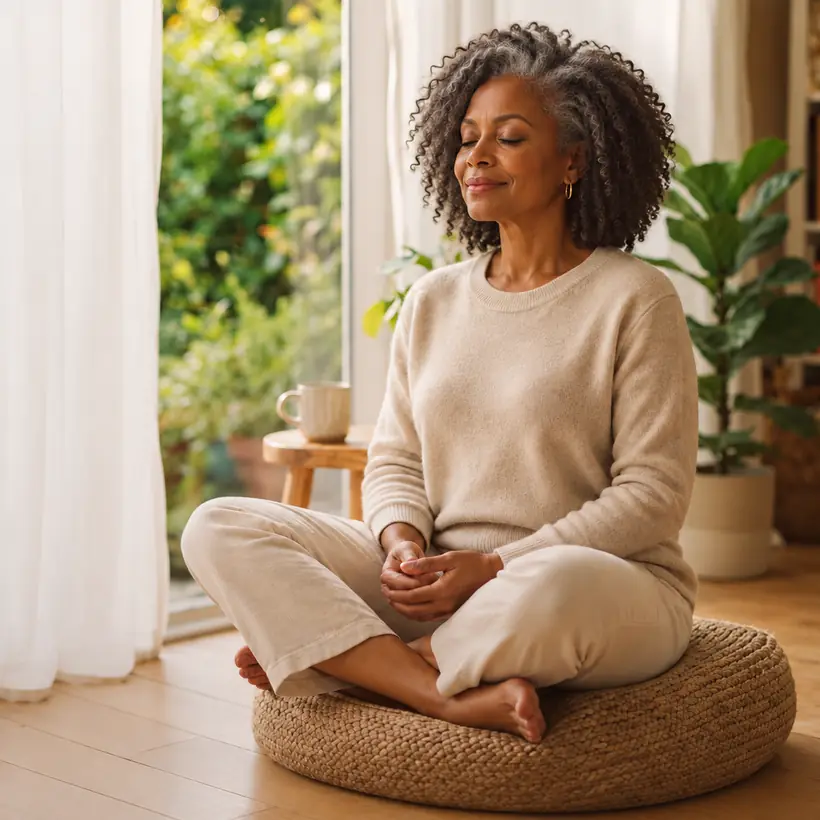
For years, I was very good at pushing through. Tired? Keep going. Stressed? It'll pass. Turns out, my body wasn't being difficult — it was trying to tell me something.
Read the unfiltered truth
I’ve spent a good portion of my life knowing exactly what I thought, then deciding whether I should say it. Sometimes that was wisdom. Not every thought needs an audience. But sometimes, it was something else.
Read the unfiltered truthListen long enough to women in their fifties and beyond, and certain stories begin to repeat. Different women. Different lives. Remarkably familiar turning points. We gathered those voices into one story, not because every woman lives it, but because so many of us recognize ourselves somewhere in it.

Drawn from the voices of women over fifty across the open web.
The house gets quieter, the schedule gets lighter, and with fewer demands filling her days, she has the opportunity to ask herself what she wants.
It isn't a rejection of the life that came before. She loved much of it, chose much of it, and built families, careers, friendships and a life she is proud of. But roles change. Children grow up. Relationships shift. Careers take unexpected turns. And eventually a question appears:
Who am I now?
That's the first threshold: Identity. She hasn't lost herself. But there may be parts she hasn't heard from in a while: interests postponed, preferences made negotiable, ideas filed under someday. And suddenly, someday has arrived.
What else could I do?
That's where Expansion begins. Women go back to school. Change careers. Start businesses. Travel alone. Learn languages. Pick up old interests or discover entirely new ones. Some changes are enormous. Others are barely noticeable to anyone but her. She brings experience, judgment and perspective with her, along with a clearer understanding of what she wants—and what she absolutely does not. She isn't starting over.
She's starting from experience.
That’s what our Reinvention Roadmap is for: start with a free quiz to find your direction and one first step for this weekend or this month. If you’d like a fuller plan, you can purchase a personalized roadmap and printable journal. Reinvention, for us, isn’t becoming someone new. It’s expansion.
Then life occasionally interrupts the plan. A diagnosis. A loss. A body requiring more attention than it once did. Another threshold appears: Health. She begins paying attention to what her body needs now, rather than what she once expected it to tolerate. And she notices the ordinary things differently: a good morning, a long walk, a friend who calls, another birthday. Gratitude doesn't erase the difficult things. It simply gets to exist beside them.
And somewhere through all of this, another change happens. She starts saying things out loud. That's Voice. Not louder. Not harsher. Just more accurately. She states a preference. Changes her mind. Asks for what she needs. Says no without preparing a closing argument for the defense. Says yes simply because she wants to. She still reads the room. She just remembers that she is also in it.
Identity. Expansion. Health. Voice.
They don't arrive neatly or in order. We move in and out of them, revisiting them as we change. But listen to enough women and the same long sentence begins to emerge:
I met myself again. I began something new. I paid attention. And I said what I meant.
Different women. Different lives. But somewhere in another woman's story, we recognize a sentence from our own.
Three pillars, one direction. Select a category to draw out its resources — you stay in the flow, never lost to another page.
Not just anti-aging — pro-living. Preventative wellness, natural supports, and the quiet architecture of a body that carries you forward.
A note about our Health resources
Everything here is general wellness information gathered from trusted public sources — not medical advice, and not a substitute for individualized care. Your body, your history and your circumstances are your own. Please adapt what's useful, leave what isn't, and talk with a qualified healthcare professional about anything that concerns you.
Strength becomes increasingly important as we age. Muscle strength and function naturally decline over time, but resistance training can help preserve strength, mobility and independence. Think weights, resistance bands, bodyweight exercises—and yes, carrying your own suitcase still counts for something.
Strength becomes increasingly valuable as we get older—not because we're trying to turn back the clock, but because we'd like to keep doing things without needing assistance from the nearest available twenty-year-old.
Muscle strength and function naturally decline with age, particularly in later decades. Regular resistance exercise can help maintain strength, physical function and the ability to keep doing everyday things independently. Federal physical-activity guidelines recommend muscle-strengthening activity at least two days a week, along with aerobic activity and, for older adults, balance work.
Think less about working out to look younger and more about training for the life you want to keep living: carrying groceries, lifting luggage, climbing stairs, gardening, traveling and getting yourself—and your suitcase—into the overhead bin.
Start with two strength sessions a week. Weights are great, but resistance bands, machines and bodyweight movements count too. Add walking or another movement you enjoy, and don't forget balance and mobility.
Most importantly, build gradually and choose something you can actually imagine continuing. The perfect exercise program you abandon in three weeks is considerably less useful than the imperfect one you keep doing.
For evidence-based guidance on strength, movement and healthy aging, explore the National Institute on Aging's resources on exercise and physical activity and the federal Physical Activity Guidelines for Americans.
Hot flashes and night sweats affect up to 80% of women during the menopause transition, but they're only part of the story. Sleep, energy, mood and how your body feels can shift too. Start by noticing patterns: what you're experiencing, when it happens and what seems to make your days better—or worse.
Your body may start changing before you have a neat explanation for why.
Sleep gets different. Energy shifts. Your temperature suddenly seems to have its own agenda. Mood, concentration and how comfortable you feel in your body may change too. Hot flashes and night sweats affect up to 80% of women during the menopause transition, but every woman's experience is different.
Rather than assuming every change is simply something you have to tolerate, start by noticing it.
Patterns can be surprisingly useful. Maybe certain evenings lead to lousy nights. Maybe your energy is better when you move in the morning. Maybe something you've been calling "random" isn't quite as random as you thought.
You don't have to become your own research project. Just pay attention.
Keep a simple two-week check-in. Notice sleep, movement, energy, stress, meals, alcohol or caffeine if relevant to you, and any symptoms or changes you're experiencing.
Then look for patterns—not perfection.
Ask yourself: What seems to help? What seems to make things harder? What has changed enough that I want to learn more about it?
The point isn't self-diagnosis. It's becoming a better observer of your own body so you can make more intentional choices and have more useful conversations when you need them.
Learn more about menopause and common midlife changes through the Office on Women's Health and MedlinePlus's menopause guide from the National Library of Medicine.
Menopause isn't something to "fix." It's a transition worth understanding. Movement, nourishing food, sleep, stress practices, mind-body approaches and community can all play a role in feeling well. The goal isn't one perfect solution. It's building a personal toolkit that works for you.
Menopause gets discussed as though it's a problem women suddenly acquire somewhere in middle age.
Maybe we need a better frame.
It's a normal life transition, and the experience can range from barely noticeable to decidedly not subtle. Either way, understanding what is happening gives you more options for navigating it.
Well-being during this chapter can include movement, strength, nourishing food, sleep, stress management, social connection and mind-body practices. Some women also explore complementary approaches such as yoga, meditation or acupuncture. Evidence varies by practice and by symptom, which is exactly why this doesn't need to become another search for the one magical answer.
There probably isn't one.
The better goal is a toolkit.
Build yours intentionally.
Choose one thing that supports your body, one that supports your mind and one that simply makes your life better.
That might be strength training, a morning walk, yoga, meditation, protecting your sleep, eating more whole foods, making plans with friends or finally giving yourself permission to have twenty minutes in which absolutely nobody needs you.
Try things. Notice what helps. Keep what works. Let go of what doesn't.
Holistic wellness isn't about rejecting conventional care or embracing every "natural" solution. It's about looking at the whole person and making informed choices that fit your life.
For balanced menopause information, visit Mayo Clinic's menopause overview. For evidence about complementary and mind-body practices, explore the NIH's National Center for Complementary and Integrative Health.
Midlife is an important time to pay attention to heart health. Cardiovascular risk changes with age and through the menopause transition, making the everyday basics matter even more: regular movement, strength, nourishing food, restorative sleep, stress management and knowing your own health numbers.
Heart health deserves more attention in midlife—not panic, just attention.
Age and the menopause transition are associated with changes relevant to cardiovascular health. But heart health isn't one isolated project. Many of the same everyday habits that support the rest of you support your heart too.
Regular movement. Strength. Nourishing food. Sleep. Managing stress. Staying socially connected. Not smoking. Knowing important health measures that are relevant to you.
Nothing particularly glamorous there.
Fortunately, your heart does not require branding.
A Mediterranean-style eating pattern is one well-studied approach: plenty of vegetables, fruits, whole grains, beans, nuts, fish and unsaturated fats, with less emphasis on highly processed foods. It isn't a "diet" you need to perform perfectly. Think pattern, not rules.
Look at your week rather than trying to overhaul your life by Monday.
Where can you add movement? Could one meal include more vegetables, beans or whole grains? Could you take a walk with a friend instead of sitting for another hour? Is sleep continually getting sacrificed to everything else?
And know your own baseline. Routine preventive care and awareness of things such as blood pressure, cholesterol and blood sugar can provide information that simply "feeling healthy" can't.
The goal isn't to become obsessed with numbers.
It's to stop flying completely blind.
The American Heart Association offers practical information about heart-supportive eating, movement, sleep and lifestyle. The Mediterranean-style eating pattern is a useful place to start if you'd like food inspiration.
Sleep can get more complicated during midlife, but good sleep isn't a luxury—it supports how we function, move, think and feel. Start with the fundamentals: a consistent rhythm, morning daylight, regular movement, a cool dark bedroom and a wind-down routine your brain actually recognizes as bedtime.
At some point, sleep can go from something you simply did to something requiring project management.
Falling asleep. Staying asleep. Waking at 3:17 a.m. with your brain suddenly interested in a conversation you had in 2009.
Midlife and menopause can bring changes that affect sleep, but good sleep also depends on the rhythms and habits surrounding it. Light exposure, activity, stress, environment and consistency all help tell the body when it's time to be awake and when it's time to wind down.
And while the wellness world offers an impressive number of teas, powders, gummies and nighttime concoctions, the less exciting fundamentals still deserve first billing.
Give your body clearer signals.
Get outside in daylight, particularly earlier in the day. Move regularly. Experiment with keeping your sleep and wake times relatively consistent. Make the bedroom cool, dark and quiet. Give yourself some transition time between doing everything and expecting your brain to instantly switch off.
Then notice your own patterns. Does late caffeine affect you? Alcohol? Scrolling in bed? Stress? An inconsistent schedule?
You don't need a flawless nighttime ritual involving twelve steps and a silk eye mask.
You need one that works for you.
And if sleep problems are persistent, CBT-I—cognitive behavioral therapy for insomnia—is an established non-drug approach for chronic insomnia worth knowing about.
The National Heart, Lung, and Blood Institute has practical guidance on healthy sleep habits and insomnia. For an evidence-based look at supplements and complementary sleep approaches—including where evidence remains limited—visit NCCIH's Sleep Disorders and Complementary Health Approaches.
Midlife changes can affect vaginal comfort, pelvic-floor function, intimacy and sexual well-being — and none of it needs to become the topic nobody talks about. Lubricants, vaginal moisturizers, pelvic-floor support, communication and understanding what's changing are all part of whole-person wellness.
We talk quite freely about sleep, strength and nutrition. Vaginal dryness? Pelvic-floor changes? Sex after menopause?
Suddenly everyone gets very interested in the weather.
But these are ordinary parts of women's health and deserve the same matter-of-fact attention as everything else.
Hormonal changes around menopause can affect vaginal moisture and tissue, sometimes leading to dryness, irritation or discomfort during intimacy. Sexual well-being can also be influenced by sleep, stress, relationships, body image, medications, physical comfort and simply what you want at this stage of life.
The goal isn't to recreate your thirty-year-old body.
It's to understand and support the one you're living in now.
Start by getting comfortable paying attention—and talking about it.
For dryness or friction, vaginal moisturizers and water- or silicone-based lubricants are established nonprescription options. Hyaluronic-acid vaginal moisturizers are another option with emerging supportive evidence.
Pelvic-floor physical therapy can also be worth learning about when pelvic-floor function is part of the picture. And don't underestimate communication: comfort, desire, intimacy and sex can change over time. That's allowed.
Most importantly, persistent pain, bleeding, urinary changes or ongoing discomfort aren't things you need to quietly normalize as just getting older. Those are good reasons to have a conversation with an appropriate healthcare professional.
The Office on Women's Health's Menopause and Sexuality guide covers how menopause can affect desire and comfort, options for vaginal dryness and how to talk with a partner about the changes. Mayo Clinic's overview of vaginal dryness after menopause explains common symptoms, moisturizers and lubricants and when it's worth seeing a doctor.
Walking. Dancing. Swimming. Yoga. Hiking. Strength. The best movement isn't necessarily the trendiest—it's the kind you enjoy enough to keep doing. Aim for a mix of aerobic movement, strength, mobility and balance, and remember: some movement is always better than none.
Movement doesn't have to mean a gym membership, a complicated program or suddenly developing strong feelings about burpees.
Our bodies benefit from moving in different ways.
Walking and swimming can build aerobic activity into your week. Strength work challenges muscles. Yoga and tai chi can incorporate flexibility and balance. Dancing manages to sneak movement, balance, coordination and fun into the same activity.
Federal guidelines recommend at least 150 minutes of moderate-intensity aerobic activity per week for substantial health benefits, plus muscle-strengthening activities on at least two days. As we get older, balance becomes another important part of the mix.
But here's the part worth remembering: 150 isn't the number at which movement suddenly starts counting.
Some is better than none.
Build a movement menu rather than searching for the perfect workout.
Choose something for your heart and lungs: walk, hike, swim, cycle or dance.
Something for strength: weights, machines, bands or bodyweight.
Something for balance and mobility: yoga, tai chi, stretching or balance exercises.
And something you do for the highly scientific reason that you actually enjoy it.
Ten minutes counts. Walking with a friend counts. Dancing around your kitchen counts. A long hike counts.
The goal is less What exercise should a woman my age be doing? and more How do I want my body to keep moving through my life?
The Physical Activity Guidelines for Americans explain the evidence-based recommendations, while the CDC's guide to activity for older adults offers practical examples of what counts.
Connection is part of well-being. Friendships, family, community, purpose, time outside and practices that help quiet the noise all support a fuller life. The goal isn't to collect more people. It's to stay meaningfully connected to yourself and to others.
Somewhere along the way, adult friendship became something requiring calendars, three reschedules and a text that begins, We really need to get together.
But connection matters.
Research consistently links social isolation and loneliness with poorer physical, emotional and cognitive health. A large body of research has also found meaningful social connection associated with better health and longevity.
But this isn't a numbers game.
You can live alone and feel deeply connected. You can have hundreds of contacts in your phone and still feel lonely.
What matters is having relationships and communities where you feel seen, supported and part of something.
And connection isn't only outward. Mental well-being can also be supported by making space for quiet, reflection, movement, nature, mindfulness, creativity and whatever reliably helps you return to yourself.
Think about connection as something worth tending rather than something that simply happens.
Call the friend you've been meaning to call. Put the recurring dinner on the calendar. Join the walking group, book club, class, volunteer organization or women's circle. Revisit an old friendship—or make room for a new one.
And create some space for yourself too. Take the walk without your phone. Sit outside with your coffee. Journal. Meditate. Garden. Read. Do something creative badly and enjoy it anyway.
You don't need an enormous social circle or an elaborate mindfulness practice.
You need connection that actually feels like connection.
The National Institute on Aging's guide to loneliness and social isolation explains the difference between being alone and being lonely and offers practical ways to stay connected. The U.S. Surgeon General's Social Connection resources explore the broader evidence linking connection with health and well-being.
For community, look locally rather than assuming one organization fits everyone: libraries, recreation departments, continuing-education programs, volunteer organizations, walking groups, arts organizations and interest-based women's groups can all be starting points.
Money as freedom, not fear. Understand what you have, protect what you've built, and make informed choices about what comes next. No shame. No financial jargon Olympics. Just more clarity, more confidence and more control.
You don't have to personally manage every financial detail. But you should know how your financial life works. What you own. What you owe. Where the accounts are. What's insured. Who has access. And, importantly, how you would take over tomorrow if you needed to.
In plenty of households, responsibilities get divided.
One person handles travel. Someone handles insurance. Someone knows the Wi-Fi password. And sometimes one person becomes the unofficial CFO.
Nothing wrong with that.
Until the person who doesn't normally handle the finances suddenly has to.
Divorce, widowhood, illness, caregiving or an unexpected life change can turn "my partner handles that" into "I need to understand this now."
And that's a particularly difficult moment to begin looking for passwords, account numbers, insurance policies and the name of the person who apparently knows everything about your retirement account.
Financial independence doesn't mean keeping your money separate from a spouse or partner. And it doesn't mean you need to become the household portfolio manager.
It means having knowledge, access and a voice in the decisions that affect your financial life.
Start by creating your own financial map.
Know where your checking, savings, retirement and investment accounts are held. Understand what debts exist and whose names are attached to them. Know what insurance policies you have and where important tax and estate documents are kept.
Make sure you understand which accounts are individual, which are jointly owned and which have beneficiary designations.
Know who your financial professionals are—financial adviser, accountant, attorney, insurance professional—and how to contact them.
And know how to access what you're legally entitled to access. That doesn't mean sharing passwords or bypassing account security. It means making sure appropriate access, ownership, beneficiaries and legal authorizations have been thoughtfully arranged.
Then get involved.
Attend the meeting. Ask the question. Read the statement. Learn what the acronym means.
You don't have to understand everything in one afternoon.
But you shouldn't be a guest in your own financial life.
Ask yourself:
Could I explain our financial picture without someone else in the room?
Do I know approximately what we own and owe?
Do I know where our income comes from?
Can I identify our major accounts and insurance policies?
Do I know where tax returns, estate documents and other important records are kept?
Do I know who is named as beneficiary on my own accounts?
Do I know which bills and obligations need to be paid regularly?
Do I know whom to call if something happened tomorrow?
Anything you can't answer isn't a failure.
It's simply the next thing to learn.
The Consumer Financial Protection Bureau offers free tools for understanding and organizing personal finances.
SEC Investor.gov is a useful independent resource for learning investment basics and checking the background of investment professionals.
You can also use FINRA BrokerCheck to research the registration and background of brokers and brokerage firms.
Several large investment firms also offer free education. These are companies that sell financial services, so learn freely but you're never obligated to open an account. Fidelity's Women Talk Money is a free community with workshops and guidance focused on women's finances, and you don't need to be a customer to join. Vanguard's investor education covers long-term investing, retirement and Social Security basics. Charles Schwab's education center offers articles, videos and free live webcasts on investing and trading.
This is general financial education, not individualized financial, investment, legal or tax advice.
Financial confidence starts with knowing what's actually happening with your money. What comes in, what goes out, what you owe, what you own and what you're saving. No judgment. Just numbers—and numbers are much easier to work with once you can see them.
Money can feel considerably more intimidating when it's vague.
You may know you're spending too much somewhere. You think you're saving enough. You're fairly certain there are subscriptions you haven't used since 2022.
Start with facts.
A realistic picture of income, spending, savings and debt gives you something much more useful than guilt: choices.
And there isn't one universally "correct" budgeting system. Zero-based budgeting works beautifully for some people. Others prefer percentages, spending categories or a simple cash-flow plan. The best system is the one that helps you understand and intentionally direct your money.
Give yourself one financial hour.
List your monthly income, regular expenses, less-frequent expenses, debts and savings. Look back several months so the annual insurance bill, vacation, gifts and other irregular expenses don't mysteriously become "unexpected."
Then ask: What am I spending because I value it? What am I spending because I stopped paying attention?
If you're carrying debt, compare approaches. Paying the highest-interest debt first generally saves more money; paying the smallest balance first can provide quicker psychological wins. Both are legitimate strategies.
And begin building a financial cushion. Even a modest emergency fund can provide some protection against the next surprise expense.
The CFPB — Your Money, Your Goals Toolkit offers spending trackers, cash-flow budgets, debt tools and other free worksheets.
Open the Calculator →Willpower has plenty to do already. Automation can move money toward savings and long-term goals before everyday life finds somewhere else to spend it.
Most of us have excellent intentions for the money left over at the end of the month.
Then the month happens.
Automation turns I'll save what's left into I'll decide what to save first.
That might mean an automatic workplace retirement contribution, a recurring transfer to emergency savings or separate automatic transfers toward travel, a home project or another goal.
It doesn't guarantee wealth.
It simply makes consistency easier.
Look for one financial decision you're currently making over and over again.
Could it happen automatically?
Set a recurring savings transfer. Consider increasing a workplace retirement contribution when your circumstances allow. Automatically direct money toward a specific goal.
Then automate the review, too.
Put a financial check-in on your calendar every few months. Automation should make your financial life easier—not invisible.
Set it. Don't completely forget it.
The CFPB — Building an Emergency Fund offers practical approaches to creating a consistent savings habit.
The SEC Investor.gov — Savings Goal Calculator can help translate a future goal into a monthly savings amount.
Saving puts money aside. Investing gives it the opportunity to grow. Compound growth, diversification, time and attention to fees are some of the fundamental ideas worth understanding—without needing to become someone who watches the market before breakfast.
Compounding is simply growth building on previous growth.
Over long periods, that can become powerful. But there's an important distinction: investment returns aren't interest and they aren't guaranteed.
Learn four concepts before worrying about picking investments:
Compounding. Diversification. Risk. Fees.
Then look at your own investments. What do you own? Why do you own it? What does it cost? How diversified is it? When will you need the money?
And experiment with the numbers. Seeing what different contributions, time periods and hypothetical returns can do makes compounding much easier to understand.
You don't need to predict the market.
You need to understand what your money is doing.
The SEC Investor.gov — Compound Interest Calculator lets you experiment with time, contributions and hypothetical rates.
The SEC Investor.gov — Index Funds explains costs, benefits and risks without selling you a fund.
Fifty doesn't mean you're late. In fact, the tax rules may give you additional room to save. Catch-up contributions can create an opportunity to put more toward retirement during years when your circumstances allow it.
The IRS allows people age 50 and older to make additional contributions to many tax-advantaged retirement accounts.
And there's now another wrinkle worth knowing.
For 2026, the employee contribution limit for most 401(k), 403(b) and governmental 457 plans is $24,500. The general age-50+ catch-up is another $8,000. For people ages 60 through 63, the higher catch-up limit is $11,250. The 2026 IRA limit is $7,500, with an additional $1,100 catch-up for people 50 and older. Eligibility and tax treatment can vary.
In other words: the rules actually recognize that later-career years can be important saving years.
Find out what you're currently contributing and what your plan allows.
Then ask whether an increase fits your finances.
You don't have to jump from 5% to the maximum overnight. One percentage point more is still more. A raise or bonus can also be an opportunity to increase savings without dramatically changing everyday spending.
And if your employer offers a match, understand how it works.
Know the ceiling. Then decide what makes sense beneath it.
The IRS — 2026 Retirement Contribution Limits has the current contribution and catch-up limits.
Future care isn't the most entertaining financial topic. Which is exactly why it's tempting to postpone. Understanding what Medicare does—and doesn't—cover gives you time to think about your preferences before someone else has to make decisions in a crisis.
One of the biggest misconceptions about later-life planning is that Medicare will simply cover long-term care.
Generally, it doesn't.
Medicare may cover qualifying short-term skilled care, but it generally does not pay for long-term custodial care—help with everyday activities such as bathing, dressing or eating—when that's the only care needed.
That means future care can become both a lifestyle question and a financial one.
Where would you want to live? Who could realistically help? What could you afford? What resources would you want available?
Those are much easier questions to explore before they're urgent.
Start with the life question before the insurance question:
What would I want care to look like?
Learn what Medicare covers. Understand your assets, income and insurance. Explore the potential costs of receiving help at home, assisted living or other care where you live.
Long-term-care insurance, hybrid insurance products, personal assets and Medicaid eligibility can all enter the conversation, but none is automatically right for everyone.
Planning is the goal.
Not predicting exactly what you'll need twenty years from now.
Medicare — Long-Term Care Coverage explains clearly what Medicare generally does and doesn't cover.
Insurance, Medicaid eligibility and long-term-care planning can be complex. Individual guidance may be useful before purchasing financial or insurance products.
Estate planning isn't only about what happens to your money someday. It's about making your wishes easier to understand, your important information easier to find and your decisions less complicated for the people you care about.
A will matters.
But it isn't the entire plan.
Retirement accounts and insurance policies commonly transfer according to their beneficiary designations, not simply according to what's written in a will. FINRA specifically notes that beneficiary designations can remain in place through major life changes, making periodic reviews important.
Marriage. Divorce. Widowhood. A new grandchild. A move. A changed relationship.
Life changes.
Your paperwork doesn't update itself.
Create a simple legacy checkup.
Review your will or estate documents. Check beneficiaries on retirement accounts and insurance policies. Add contingent beneficiaries where appropriate. Know where important documents are stored and make sure the right person knows how to find them.
Then go beyond the paperwork.
What would make things easier for the people you love? What possessions actually matter to you? Are there charitable intentions you want documented? Are there stories, letters, photographs or traditions you'd like to leave behind too?
Because a legacy isn't simply what you leave.
It's what you intentionally pass on.
FINRA — Retirement Accounts & Beneficiaries explains why beneficiary designations deserve their own review.
For wills, trusts, powers of attorney and estate documents, state laws matter; an estate-planning attorney can provide individualized legal guidance.
The world is still wide. Places to go. Things to learn. People to meet. Ideas to explore. And maybe a few things you've been saying “someday” about for entirely too long. This is where someday gets a date on the calendar.
You don't have to wait for someone else's vacation schedule—or willingness to go where you want to go. Solo travel and small-group trips designed for women and older travelers can make seeing the world more accessible, social and considerably less intimidating.
There are places you've always wanted to see.
And sometimes the person you'd normally travel with has absolutely no interest in hiking through Patagonia, wandering around Morocco or spending a week learning to make pasta in Italy.
This is not an emergency.
Traveling independently doesn't necessarily mean traveling alone. Small-group travel can offer the structure of an itinerary and the companionship of a group while still giving you the satisfaction of going because you wanted to go.
Women's travel companies, educational travel organizations and traditional small-group operators all offer different versions of that experience.
The question isn't Am I a solo traveler?
Maybe it's simply: Where would I go if I stopped waiting for someone to come with me?
Start with the place rather than the tour company.
Where have you always wanted to go? What kind of experience sounds appealing now—adventure, food, history, nature, art, learning, relaxation?
Then compare group size, physical activity level, accommodations, cancellation policies and what is actually included.
If you're traveling solo, pay particular attention to single supplements and room-sharing policies. "Solo-friendly" doesn't always mean there is no additional cost.
Not ready for two weeks in another hemisphere?
Start smaller.
Take the weekend trip. Join the day excursion. Book the three-night getaway.
Adventure doesn't require a passport stamp.
Ready to see what's out there? Explore our Curated Travel Directory, where we research small-group travel companies and organize them by women-only and co-ed travel, U.S. and international.
We periodically refresh the directory and prioritize companies with established independent traveler reviews, so you have a starting point for your own research.
A little research can turn "I don't know if I'd be comfortable doing that alone" into "Actually, I could do this." Women-focused travel communities offer destination advice, firsthand experience and practical information from women who've already been there.
Travel planning changes when you're traveling on your own.
Where will you stay? How will you get around? What neighborhoods make sense? What's the cultural expectation for women? How late do you want to be navigating somewhere unfamiliar?
These aren't reasons not to go.
They're reasons to do your homework.
And sometimes the most useful information comes from another woman who has already stood in the train station trying to figure out which platform she was supposed to be on.
Research the destination from several angles.
Check current government travel advisories. Read recent traveler experiences. Research transportation before you arrive. Know how you'll get from the airport or station to your accommodation.
Share your itinerary with someone you trust and keep important information accessible.
Then look beyond logistics.
Find the bookstore. The neighborhood market. The museum nobody mentioned. The walking tour. The café where you can sit for an hour without needing to be anywhere else.
Planning makes room for spontaneity.
JourneyWoman has been publishing travel information for women since 1994 and focuses particularly on women 50+.
For destination-specific safety information, use the U.S. Department of State's Travel Advisories and consider the free Smart Traveler Enrollment Program (STEP) when traveling internationally.
Travel conditions can change quickly. Use current official information when planning international travel.
Sometimes the best way to see more is to do less. Stay longer. Learn the neighborhood. Shop at the market. Find your coffee place. Stop trying to fit an entire country into six days.
There's travel.
And then there's arriving somewhere long enough to temporarily stop feeling like a tourist.
Slow travel trades the checklist for immersion.
Instead of three cities in seven days, maybe it's one apartment for three weeks. You learn the neighborhood, recognize the person at the bakery and discover that the little restaurant around the corner is considerably better than the one with 14,000 online reviews.
Home exchanges and house-sitting can make longer stays possible for some travelers, while longer-term rentals and extended-stay accommodations offer other approaches.
It isn't necessarily about spending less.
It's about experiencing differently.
Pick one destination you've already visited—or always wanted to know better.
Then ask: What would this trip look like if I didn't have to see everything?
Compare accommodations, neighborhoods, transportation and longer-stay options.
If considering a home exchange or house-sitting arrangement, read the platform's current terms carefully. Understand responsibilities, insurance, cancellation policies, fees and what happens if plans change.
And leave blank space in the itinerary.
You don't have to optimize every day you're away.
Sometimes wandering around is the activity.
HomeExchange facilitates home exchanges through a membership-based platform.
TrustedHousesitters connects pet owners with sitters who stay in their homes while caring for their pets.
These are different models with different responsibilities—compare the current terms carefully before deciding whether either fits your travel style.
Home exchanges and house-sitting involve practical, contractual and insurance considerations. Review current terms directly with each provider.
You are allowed to be a beginner again. Learn the language. Take the photography class. Study history. Finally figure out what everyone means by artificial intelligence. Curiosity doesn't have an expiration date.
For much of adulthood, learning tends to have a purpose.
A degree. A promotion. A certification. Something useful.
And then there's the pleasure of learning something simply because you find it interesting.
Lifelong learning can provide intellectual stimulation, structure, community and the highly underrated experience of discovering you're terrible at something and enjoying it anyway.
You don't have to turn every interest into expertise.
Make a curiosity list.
Write down five things you've wanted to understand, try or learn.
Painting? Italian? Genealogy? Astronomy? Creative writing? Gardening? Photography? Philosophy? Technology?
Pick one.
Then decide whether you'd rather learn in person or online. A classroom adds community. Online courses add flexibility. Neither needs to become a major commitment.
You are not applying to college again.
Unless, of course, you want to.
Osher Lifelong Learning Institutes (OLLI) support lifelong-learning programs for adults 50+ through a nationwide network of universities and colleges.
Coursera offers online courses from universities and organizations, while MasterClass takes a more entertainment-oriented approach to learning from well-known practitioners.
Also check your local library, community college, university continuing-education program and parks or recreation department. Sometimes the interesting thing is ten minutes from home.
Not every trip needs an itinerary. Sometimes what you need is a few days with fewer responsibilities, less noise and enough space to hear yourself think.
Retreats can sound indulgent. So can closing the door. Women spend enormous amounts of time being available—to family, work, friends and all the ordinary logistics of life. A retreat creates a boundary around time.
It might be yoga or writing. Hiking or art. Wellness or meditation. A structured program with twenty women you've never met—or three days by yourself with a notebook and no agenda.
The important part isn't the word "retreat." It's the space.
Start by asking what you're actually looking for: rest, reflection, creativity, movement, community or solitude? Then choose accordingly.
Before booking a retreat, look beyond the beautiful photographs. Who is leading it? What's included? How structured are the days? How much time is actually your own? What are the accommodations, cancellation policies and expectations?
And remember: reflection doesn't require airfare and matching linen outfits. You can create your own retreat. One day. One weekend. One rule: Nothing on the schedule that exists solely because someone else needs it.
Use the She's Unscripted Retreat Finder to explore current writing, wellness, creative, nature and reflection retreats. Listings are periodically refreshed and include independent review sources when available.
Or create your own. Book the quiet hotel. Rent the little cabin. Spend a weekend near the water. Take yourself somewhere that gives you what you're actually looking for: space.
She's Unscripted provides retreat listings as a research resource, not an endorsement. Retreat programs, facilitators, pricing, schedules and policies can change. Review current program details, qualifications where relevant, cancellation policies and independent participant feedback before booking.
Maybe you're done with the career. Maybe you're not. Maybe what comes next isn't another job at all. Work, volunteering, mentoring, creating and contributing can all give experience somewhere new to go.
There's a strange assumption that after a certain age we're supposed to choose between working exactly as we always have or retiring completely.
There's quite a lot of territory in between.
Consulting. Mentoring. Volunteering. Teaching. Board service. Part-time work. Starting something. Supporting a cause. Finally doing the project that never fit neatly around the career.
Purpose doesn't require a title.
And meaningful work doesn't have to look like the work that came before it.
Instead of asking What should my next career be?, try three different questions:
What am I good at?
What do I care about now?
How much of my time do I actually want to give it?
Then look for the overlap.
Make a list of the skills and experience you've accumulated that could be useful somewhere else.
And don't discount what comes easily to you simply because you've been doing it for thirty years.
Experience has value.
You get to decide where to spend it.
CoGenerate (formerly Encore.org) focuses on bringing generations together for social impact.
AmeriCorps Seniors connects adults 55+ with volunteer opportunities.
VolunteerMatch offers searchable volunteer opportunities across causes and organizations.
Your next meaningful role doesn't necessarily have to come with a paycheck—or a business card.
Friendship changes too. Children grow up. Careers shift. People move. Old friendships evolve. Sometimes the next chapter includes finding new people—not replacing anyone, just making the circle a little wider.
Making friends at twenty was strangely easy.
You lived down the hall. Worked the same shift. Had children the same age. Stood next to each other at soccer practice long enough that eventually someone suggested wine.
Later, friendship can require more intention.
And that isn't a bad thing.
Shared interests create natural places to begin: walking groups, travel groups, book clubs, volunteer organizations, classes, faith communities, arts groups and women's circles.
You don't need fifty new friends.
You need a few places where showing up regularly gives familiarity a chance to become connection.
Don't start by trying to make friends.
Start by going somewhere repeatedly.
Take the class. Join the walking group. Volunteer twice a month. Attend the same book club. Say yes to the invitation you're mildly tempted to decline because staying home would be easier.
Then do the surprisingly difficult part.
Go back.
Connection usually isn't built during one spectacular evening.
It's built through repetition.
Meetup can help locate interest-based groups and events in many communities.
Sisterhood Travels combines women's group travel with an emphasis on connection and community.
And don't overlook the least glamorous resources: your library, local arts center, community organization, volunteer network and continuing-education program.
Sometimes your people aren't hiding.
You just haven't walked into the room yet.
Not reckless. Not dangerous. Just uncomfortable enough to make you wonder if you've lost your mind for signing up. Try the thing you've been quietly curious about but keep dismissing because you're too old, too inexperienced, too uncoordinated—or simply afraid you'll look ridiculous.
Somewhere along the way, we get very good at knowing what we're good at. This is useful. It's also how our worlds can accidentally get smaller.
We stop being beginners. We gravitate toward things we already know how to do. And occasionally we mistake "I've never done that" for "That's not something I do." Those are two very different sentences.
Trying something unfamiliar doesn't have to involve conquering a lifelong fear or transforming yourself into an adventure athlete. It might be traveling somewhere alone, taking the dance class, going to dinner by yourself, learning to ski, signing up for improv, speaking in front of a room, trying the ropes course or getting on the paddleboard knowing there's a reasonably good chance you'll be getting off the paddleboard less gracefully than you got on.
The point isn't fearlessness. It's discovering that fear doesn't automatically get the deciding vote.
Think of one thing you've been curious about but keep talking yourself out of. Then listen to the reason.
I'm too old for that. According to whom? I'd probably be terrible at it. Quite possibly. Beginners often are. I'd look ridiculous. Maybe briefly. Everyone will recover. I don't know anyone who would do it with me. You may have just found your first solo adventure.
Choose something that feels like a stretch, not a genuine safety risk. Prepare appropriately. Take the beginner class. Use the safety equipment. Ask for help. Modify when you need to. Then give yourself permission to be new at something.
You don't have to be good at it. You don't even have to do it twice. You just have to find out what happens when "I could never do that" becomes "I did that once."
Make a list of five things that make you think, I'd love to do that, but… Don't edit the list for practicality yet. Then circle the one with the smallest but. That's probably where you start.
Look locally for beginner-friendly experiences through recreation departments, community colleges, outdoor organizations, arts centers and continuing-education programs. Sometimes the scariest part is simply signing up.
A short note now and then: one small story, one good question and one step you can take that day. No pressure.


